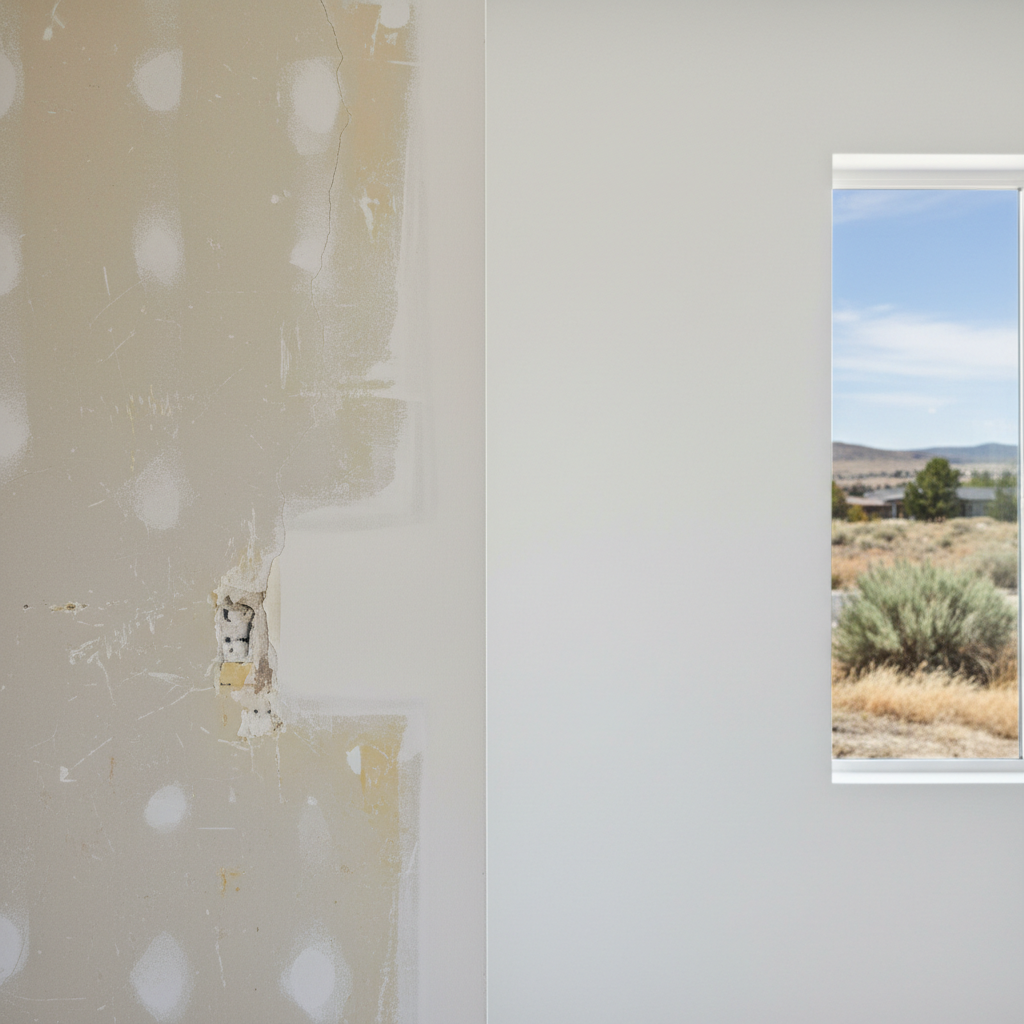
Got walls that need some serious love? Maybe you've knocked one down, added a room, or your plaster is just giving up the ghost. You're probably looking at new drywall or a major renovation, and that means finishing. But what's the best way to get that smooth, paint-ready surface? Essentially, you're choosing between traditional taping and mudding new sheets, or skim coating over existing, damaged walls. Let's talk about the pros and cons of each, especially for us here in Boise.
Taping and Mudding New Drywall: The Standard Approach
This is what most folks picture when they hear 'drywall installation.' You hang full sheets of drywall, then tape the seams with joint tape. After that, you apply multiple layers of joint compound (we call it mud) over the tape and screw holes. Each layer gets sanded smooth before the next, building up a perfectly flat surface. It's a process, for sure.
Cost
If you're starting from scratch, say with new framing or a gut remodel, this is usually the most cost-effective way to go. You're paying for the drywall sheets, tape, mud, and the labor to hang and finish it all. The material cost per square foot is pretty straightforward. For a new build or a big addition, it's the clear winner.
Durability
Extremely durable. Once it's done right, those walls are solid. The joint compound hardens like rock, and the tape reinforces the seams, preventing cracks. It's built to last for decades, handling everything from kids' bumps to general wear and tear.
Maintenance
Very low maintenance. If you get a ding or a small hole, it's easy to patch and repaint just that spot. The surface itself is stable. You won't see cracks appearing unless there's significant structural movement in your house.
Appearance
When a pro does it, it's absolutely seamless. You can achieve Level 4 or even Level 5 finishes, which means a perfectly smooth, uniform surface ready for any paint or texture. This is the gold standard for new construction and renovations where you want a pristine look.
Skim Coating Existing Walls: A Resurfacing Solution
Skim coating isn't about replacing drywall; it's about applying one or more very thin layers of joint compound directly over an existing surface. This could be old, damaged drywall, textured walls you want to smooth out, or even plaster that's seen better days. It's basically giving your walls a fresh, smooth skin.
Cost
This is where it gets tricky. If your existing walls are in decent shape but you just want to smooth out a light texture, it can be cheaper than tearing everything out and re-hanging. However, if your walls are severely damaged, have a lot of cracks, or are uneven, the labor involved in skim coating can quickly add up. Sometimes, it costs more than just putting up new drywall because it's such a painstaking process to get it perfectly flat over an imperfect surface. We see this a lot in older homes in the North End with original plaster walls; sometimes, a skim coat is the only way to save them without a full demolition.
Durability
The durability depends heavily on the condition of the wall underneath. A skim coat won't fix structural issues or stop cracks from reappearing if the underlying wall is unstable. It's durable as a surface layer, but it's only as good as what it's covering. If the old drywall is crumbling, a skim coat is just a temporary band-aid.
Maintenance
Similar to new drywall, a skim-coated wall is easy to patch if it gets damaged. However, if the underlying issues (like settling cracks or moisture damage) weren't fully addressed, you might find yourself doing more frequent repairs to the skim coat itself.
Appearance
A well-done skim coat can look fantastic – just as smooth and seamless as new drywall. It's the go-to method for getting rid of outdated textures like orange peel or even some light popcorn ceilings on walls, giving you that modern, flat finish. The challenge is achieving that perfect flatness over an irregular surface, which requires a lot of skill.
Which One Should You Choose for Your Boise Home?
Here's the deal: if you're doing an addition, building new walls, or your existing walls are so far gone that you're looking at major repairs, taping and mudding new drywall is almost always the better, more cost-effective, and more durable solution. You get a fresh start, and the results are guaranteed to be top-notch.
However, if your walls are structurally sound but have minor imperfections, a light texture you hate, or small areas of damage, then skim coating is a fantastic option. It's less messy than a full tear-out and can save you the hassle of dealing with demolition debris. It's also great for preserving older, solid plaster walls that just need a facelift.
At Boise Drywall Company, we handle both. We'll always give you an honest assessment of your walls and recommend the approach that makes the most sense for your budget, your goals, and the condition of your home. Sometimes, it's a mix – new drywall where needed, and a skim coat to blend everything seamlessly. Don't hesitate to give us a call to talk through your project.